In today’s digital world, children are exposed to screens more than ever before. Many Indian parents notice their children struggling with attention span, restlessness, and lack of focus in studies.
One simple and powerful solution? Coloring.
Coloring is not just a fun activity — it plays a major role in improving focus, concentration, and fine motor development in children.
Let’s explore how.
Why Do Children Struggle With Focus Today?
In many Indian households:
Mobile phones are easily accessible
Screen time is increasing
Outdoor play is decreasing
Attention spans are shortening
Fast-paced digital content trains the brain for quick stimulation. As a result, children find it difficult to sit and focus on structured tasks like homework or writing.
This is where coloring helps retrain the brain.
7 Ways Coloring Improves Focus in Children
1 Encourages Sustained Attention
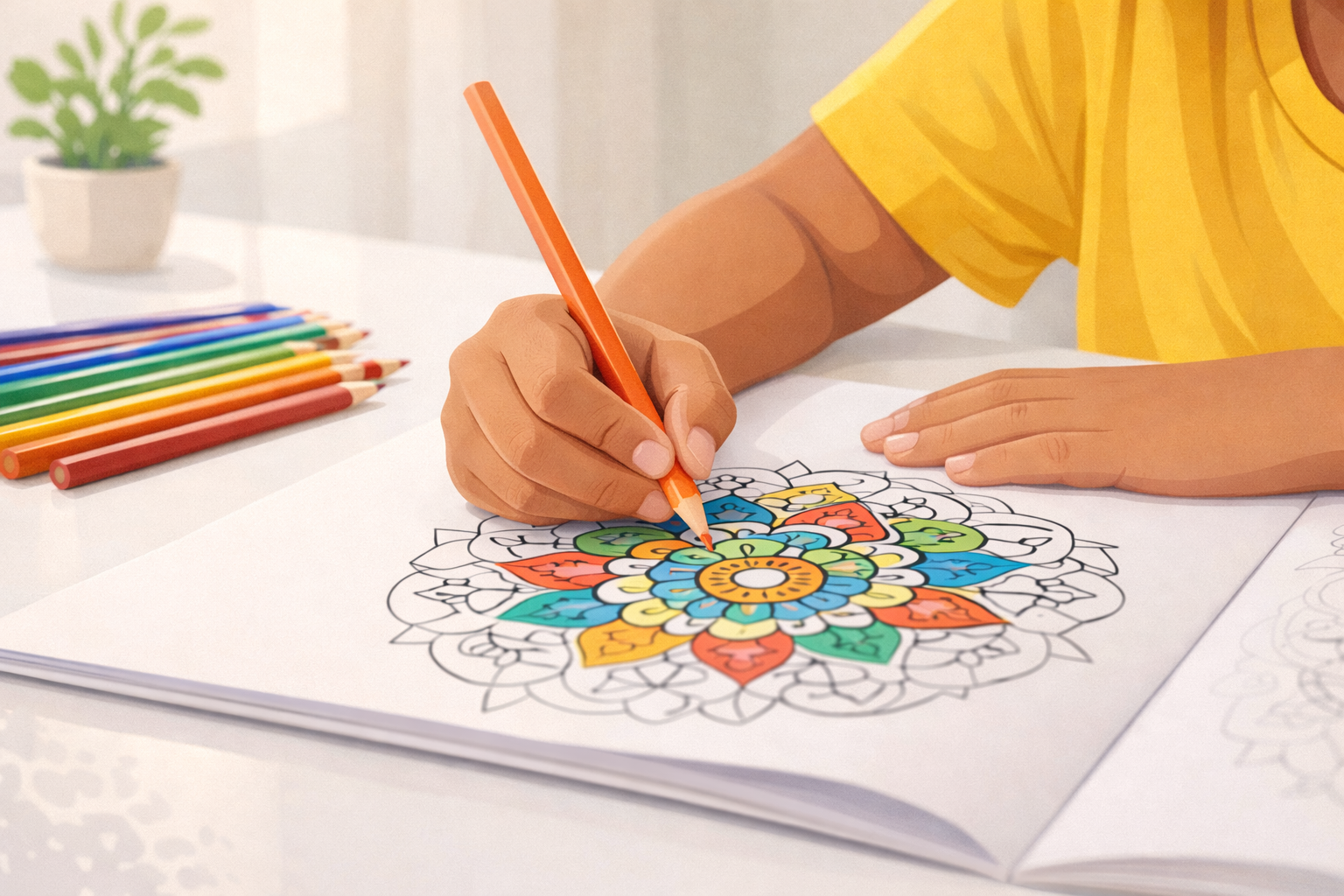
When a child colors inside a design, especially detailed patterns like mandalas, they must:
Stay within boundaries
Choose colors carefully
Focus on small sections
This improves sustained concentration.
2 Reduces Hyperactivity
Coloring has a calming effect on the nervous system.
It slows breathing and reduces overstimulation caused by screens.
Many parents notice children become quieter and more relaxed after 20–30 minutes of coloring.
3 Improves Fine Motor Skills
Coloring strengthens:
Finger muscles
Pencil grip
Wrist stability
Strong fine motor skills reduce fatigue during writing tasks in school.
Read more about fine motor skills activities for kids here: https://artoria.co.in/post.php?slug=fine-motor-skills-activities-for-48-year-olds-in-india-screen-free-ideas
4 Develops Patience
Completing a full page requires time and effort.
Children learn to:
Finish what they start
Manage small details
Build task completion habits
5 Enhances Creativity and Decision-Making
Choosing colors improves:
Creative thinking
Independent decision making
Visual planning
This strengthens cognitive development.
6 Builds Confidence
When children complete a coloring page, they feel proud.
This small success builds confidence and encourages independent learning.
7 Acts as a Screen-Free Mindfulness Activity
Coloring is similar to meditation for children.
It improves:
Emotional regulation
Calm behavior
Mental clarity
In fact, many educators now recommend structured coloring activities to improve classroom focus.
Why Mandala Coloring Is Especially Effective
Among all coloring styles, mandala patterns are particularly powerful because they:
- Require controlled movement
- Improve symmetry understanding
- Enhance precision
- Increase attention span
Detailed designs gently challenge children without overwhelming them.
For parents looking for an affordable and structured option, a mandala coloring book can become a daily focus-building habit.
Explore our Mandala Coloring Book for Kids (4–14 Years) here:
https://www.artoria.co.in/
How Much Coloring Is Recommended?
For children aged 4–14 years:
20–30 minutes per day
4–5 days per week
Keep it pressure-free
Consistency matters more than duration.
Signs Coloring Is Improving Your Child’s Focus
You may notice:
Improved handwriting
Longer homework concentration
Reduced screen demand
Better patience
Calmer behavior
Frequently Asked Questions
Does coloring really improve concentration?
Yes. Coloring trains the brain to focus on a single task for an extended period, improving attention span over time.
Is coloring better than screen time?
Coloring actively engages hand muscles and brain focus, while screens provide passive stimulation.
What type of coloring book is best?
Structured designs like mandalas are ideal for improving focus and fine motor control.
Final Thoughts for Indian Parents
Improving a child’s focus doesn’t require expensive classes or complex programs.
Sometimes, simple screen-free activities like coloring can make a big difference.
By introducing regular coloring sessions at home, parents can support:
Better concentration
Stronger handwriting
Improved patience
Calm behavior
Start small. Stay consistent. Encourage creativity.